
We Build AI & Automation for E-Commerce Companies
AI-powered customer service, personalization engines, and e-commerce automation. From multilingual AI email agents to fashion recommendation systems—we've built AI solutions that increase conversion, reduce support costs, and enhance customer experience.
What’s included
AI Email Agent:
- ✓Automatically respond to customer emails
- ✓ Multi-channel support (email, chat, social media)
- ✓Order management queries (track order, cancel order, change address)
- ✓Product questions (size, availability, shipping)
- ✓ Returns and refunds automation
- ✓Multilingual support (translate queries, respond in customer's language)
AI Chatbot:
- ✓Website chat widget
- ✓Instant answers to FAQs
- ✓Product recommendations
- ✓Order tracking
- ✓Escalation to human support (if needed)
Social Media Automation:
- ✓Facebook Messenger, Instagram DM automation
- ✓ Respond to comments (product questions, compliments, complaints)
- ✓Social commerce (buy via DM)
Voice AI (IVR):
- ✓Intelligent virtual assistant for phone calls
- ✓Take notes, escalate to supervisor
Product Recommendations:
- ✓"You may also like" (similar products)
- ✓"Frequently bought together" (cross-sell)
- ✓"Complete the look" (fashion bundles)
- ✓Personalized homepage (based on browsing history)
Fashion AI:
- ✓Style recommendations (based on preferences)
- ✓Virtual try-on (AR/AI)
- ✓Size recommendation (AI-powered fit prediction)
- ✓ Outfit builder (mix-and-match suggestions)
Dynamic Content:
- ✓Personalized banners (show different banners to different customers)
- ✓Personalized email campaigns (product recommendations per customer)
Search & Discovery:
- ✓AI-powered site search (natural language queries)
- ✓Visual search (upload image, find similar products)
- ✓Voice search (Alexa, Google Assistant)
Order Management:
- ✓ Auto-fulfill orders (integrate with 3PL, dropship suppliers)
- ✓ Auto-generate shipping labels
- ✓ Auto-send tracking emails
- ✓Auto-refund (for approved returns)
Inventory Management:
- ✓Auto-reorder (when stock low)
- ✓ Multi-warehouse sync
- ✓ Backorder automation
- ✓ Low stock alerts
Marketing Automation:
- ✓Cart abandonment emails (auto-send to abandoners)
- ✓Win-back campaigns (inactive customers)
- ✓Post-purchase emails (review requests, cross-sell)
- ✓Birthday/anniversary emails (personalized offers)
Pricing Automation:
- ✓ Dynamic pricing (adjust based on demand, competition)
- ✓Discount automation (schedule sales, personalized discounts)
- ✓Currency conversion (auto-update exchange rates)
Integration & Data:
- ✓E-commerce platform integration (Shopify, WooCommerce, custom)
- ✓ CRM integration (HubSpot, Salesforce)
- ✓Email marketing (Klaviyo, Mailchimp)
- ✓Analytics (Google Analytics, Mixpanel)
- ✓ Data warehouse (aggregate customer data, analytics)
Platform Delivery:
- ✓ AI model training and deployment
- ✓ Integration with e-commerce platform
- ✓ Admin dashboard (configure AI, view analytics)
- ✓ Monitoring and optimization
- ✓ A/B testing framework
Compliance & regulations
Data Privacy:
- •GDPR (EU): AI must respect customer privacy
- • Data minimization (only collect necessary data)
- • Right to explanation (explain AI decisions)
- • Right to opt-out (opt out of personalization)
- •CCPA (California): Consumer data rights
- • Disclose AI usage (privacy policy)
- • Opt-out of data selling
AI Transparency:
- • Disclose AI usage ("Responses may be AI-generated")
- • Human escalation (customer can request human support)
- • Accuracy disclaimer (AI may make mistakes)
CAN-SPAM (Email Automation):
- • Unsubscribe option (all automated emails)
- • Accurate sender information
- • Clear subject lines
Accessibility:
- • AI chatbot must be accessible (screen reader compatible)
- • Alternative to AI (phone, email support)
What We Provide:
- ✓ GDPR/CCPA compliant AI systems
- ✓ AI transparency disclosures
- ✓ Human escalation workflows
- ✓ Privacy policy updates (AI usage)
- ✓ CAN-SPAM compliant email automation
3 challenges we overcame
Challenge 1: AI Email Agent Context Awareness (1hero)
The Problem
AI email agents must be context-aware to provide accurate, helpful responses. Customer emails reference past orders ("Where's my order?"), previous conversations ("As I mentioned before..."), and customer-specific context (subscription status, VIP tier). Generic AI responses frustrate customers. Need AI that pulls data from e-commerce platform, understands customer history, and generates contextual replies.
What We Faced
Ambiguous Queries:
- "Where's my order?" (which order? customer has 5 orders)
- "I want to return this" (return what? which product?)
- "Do you have this in blue?" (this = ??)
Context Requirements:
- Customer's order history (recent orders, order status)
- Customer's purchase behavior (VIP? first-time buyer?)
- Previous support conversations (did we already answer this?)
- Product catalog (is blue available for this product?)
Data Integration:
- Fetch order data from Shopify/WooCommerce API
- Fetch customer data (purchase history, tier)
- Fetch previous email threads (context from past conversations)
- Fetch product data (variants, availability)
Response Generation:
- AI must combine: Intent (what customer wants) + Context (customer data) + Action (fetch order, generate label)
- Generate natural, helpful response (not robotic)
- Include specific details
Accuracy:
- Wrong answer = customer frustration
- Wrong order referenced = confusion
- Need 95%+ accuracy to avoid human escalation
How We Solved It
1. Intent Classification:
NLP Model:
- Classify email intent (order_status, cancel_order, return_request, product_question, etc.)
- 20+ intent categories
- Fine-tuned GPT model on e-commerce support data
Entity Extraction:
- Extract entities: Order number, product name, SKU, email address
- Example: "I want to return the blue shirt from order #12345" → Order: #12345, Product: blue shirt
2. Context Fetching:
Order Context:
- If intent = order_status and no order number mentioned
- Query Shopify API: "Get customer's recent orders"
- Find most recent unfulfilled or in-transit order (likely the one they're asking about)
- Include order details in response
Customer Context:
- Fetch customer data: Total orders, lifetime value, VIP tier
- If VIP customer, prioritize response, offer special treatment
- If first-time buyer, more detailed explanations
Product Context:
- If asking about product availability, fetch product data
- "Do you have this in blue?" → Check product variants → "Yes, the [Product Name] is available in blue (size S, M, L)"
Conversation History:
- Fetch previous email threads (same customer)
- If customer replied to previous email, include that context
- "As I mentioned before..." → AI understands reference to previous conversation
3. Agentic AI Workflow:
Multi-Step Reasoning:
- Step 1: Classify intent (return_request)
- Step 2: Extract order number (if provided)
- Step 3: Fetch order data from Shopify
- Step 4: Check return policy (is item eligible for return?)
- Step 5: Generate return label (via ShipStation API)
- Step 6: Compose response with return instructions + label
Tool Calling (GPT Function Calling):
- GPT model can "call functions" (APIs)
- Example: Customer asks "Cancel my order"
- GPT: "I need to call cancel_order"
- System: Calls Shopify API to cancel order
- GPT: Generates confirmation response
- Enables AI to take actions (not just answer questions)
4. Confidence Scoring:
AI Confidence:
- AI assigns confidence score to each response (0-100%)
- If confidence >90%: Send response automatically (full auto mode)
- If confidence 70-90%: Draft response, human review (draft mode)
- If confidence <70%: Escalate to human (uncertain)
Human-in-the-Loop:
- Uncertain responses go to support team via Slack/email
- Human reviews, edits, sends response
- AI learns from human corrections (continuous improvement)
5. Personalization:
Customer Name:
- Address customer by name: "Hi Sarah, your order..."
- Not "Dear Customer" (impersonal)
Brand Voice:
- Match merchant's brand voice (friendly, professional, casual)
- Configurable tone settings
- Example: Luxury brand = formal, streetwear brand = casual
Empathy:
- If customer frustrated ("This is the 3rd time I'm asking!"), acknowledge frustration
- I'm sorry for the inconvenience, let me help you right away...
6. Continuous Learning:
Feedback Loop:
- Track customer replies (did AI response solve problem?)
- If customer replies again = response wasn't good enough
- If customer satisfied (no further replies) = success
- Use feedback to retrain model
Human Corrections:
- When human edits AI draft, log correction
- "AI said X, human changed to Y"
- Retrain model to avoid same mistake
Business Outcomes
- ✓Context accuracy: 95% (AI references correct order, product, etc.)
- ✓Auto-resolution rate: 85% (no human escalation needed)
- ✓Response relevance: 4.5/5 customer rating (helpful responses)
- ✓Order-related queries: 98% accuracy (tracking, status, cancellation)
- ✓Order-related queries: 98% accuracy (tracking, status, cancellation)
- ✓Result: Context-aware AI that feels like human support agent
Challenge 2: Multilingual Support at Scale (1hero)
The Problem
E-commerce companies expanding internationally need multilingual customer support. Hiring support agents for 10+ languages is expensive ($30K-$50K per agent × 10 languages = $300K-$500K annually). Translation services are slow and impersonal. Need AI that understands queries in any language, generates accurate responses, and maintains brand voice across languages.
What We Faced
50+ Languages:
- Major: English, Spanish, French, German, Italian, Portuguese, Russian, Chinese, Japanese, Korean
- Long-tail: Dutch, Swedish, Polish, Turkish, Arabic, Hindi, etc.
Translation Quality:
- Google Translate = robotic, literal translations
- Loses nuance, idioms, brand voice
- E-commerce queries have specific terminology (returns, shipping, refund)
Language Detection:
- Customer doesn't specify language
- Must auto-detect from email text
- Mixed languages (email in English, product name in French)
Brand Voice:
- Maintain brand tone in all languages
- Friendly brand in English must be friendly in Spanish (not formal)
Technical Challenges:
- Unicode support (Cyrillic, Chinese characters, Arabic)
- Right-to-left languages (Arabic, Hebrew)
- Character encoding issues
Cost:
- Translation API costs (per character)
- 10,000 emails/month × 500 characters × $0.00002/char = $100/month (Google Translate)
- GPT translation costs higher but better quality
How We Solved It
1. Language Detection:
Auto-Detect:
- Use language detection library (langdetect, Google Cloud Translation API)
- Detect customer email language automatically
- Example: "¿Dónde está mi pedido?" → Detected: Spanish
Multi-Language Support:
- If email contains multiple languages, detect primary language
- Example: "Hi, where is my pedido?" → Primary: English, secondary: Spanish (code-switching)
2. Translation Strategy:
Translate to English (Internally):
- Customer query in Spanish → Translate to English
- AI processes in English (GPT trained primarily on English)
- Generate response in English
Translate to Customer's Language:
- English response → Translate to Spanish
- Send Spanish response to customer
Why English Intermediate:
- GPT models perform best in English
- E-commerce data (orders, products) typically in English
- More efficient than multilingual AI models
3. GPT-Based Translation (vs Google Translate):
Why GPT:
- Better context awareness (understands e-commerce terminology)
- More natural translations (not literal)
- Maintains tone and brand voice
- Can handle idioms and colloquialisms
Example:
- Customer (Spanish): "Mi paquete llegó roto, quiero un reembolso"
- Google Translate (literal): "My package arrived broken, I want a refund"
- GPT (contextual): "My package was damaged in shipping, I'd like a refund"
- GPT Response (English): "I'm sorry your package was damaged! I've initiated a refund..."
- GPT Translation (Spanish): "¡Lamento que tu paquete haya llegado dañado! He iniciado un reembolso..."
Tone Matching:
- If brand voice is friendly/casual, GPT maintains that in translation
- If brand voice is formal, GPT translates formally
4. Terminology Consistency:
E-Commerce Glossary:
- Define key terms: "refund", "return label", "tracking number", "shipping address"
- Provide translations per language
- GPT uses glossary for consistent terminology
Product Names:
- Don't translate product names (keep original)
- Example: "iPhone 15 Pro" stays "iPhone 15 Pro" in all languages
5. Unicode & Character Encoding:
UTF-8 Encoding:
- All systems use UTF-8 (supports all languages)
- Database, email, APIs all UTF-8
- No character encoding issues
Right-to-Left (RTL) Languages:
- HTML email templates support RTL (Arabic, Hebrew)
- Text direction automatic
6. Cost Optimization:
Caching:
Cache common translations (FAQs, common responses)
Example: "Thank you for your order" → Cache 50+ language translations
Reduce translation API calls by 40%
Batching:
- Batch multiple translations in one API call (if possible)
- Reduce per-request overhead
7. Quality Assurance:
Native Speaker Review (Launch):
- Before launch in new language, native speaker reviews translations
- Fix any awkward phrasing, cultural issues
- Create translation style guide
Customer Feedback:
- If customer replies "I don't understand" → Flag for review
- Human support agent reviews, corrects translation
- Improve translation model
Business Outcomes
- ✓Languages supported: 50+ (vs 1-2 with human agents)
- ✓Translation quality: 4.3/5 customer rating (natural, understandable)
- ✓Cost: $500/month (AI translation) vs $300K/year (10 multilingual agents)
- ✓ Response time: <5 minutes (all languages) vs 2-24 hours (human translation)
- ✓ International expansion: Enabled without hiring local support teams
- ✓Result: Cost-effective multilingual support at scale, global reach
Challenge 3: AI Personalization Without Customer Data (Cold Start Problem - Garderobo)
The Problem
AI personalization (Garderobo fashion recommendations) requires customer data (past purchases, browsing history, preferences) to make accurate recommendations. New customers have zero data (cold start problem). Can't show personalized recommendations to first-time visitors. Generic recommendations don't convert. Need AI that provides relevant recommendations even without historical data.
What We Faced
New Customer:
- First visit to website
- No account, no browsing history, no past purchases
- AI has zero data to personalize
- Showing popular products = same as every other customer (not personalized)
Bootstrapping:
- Need quick personalization (customer won't wait 5 visits to see relevant products)
- Onboarding quiz helps but not everyone takes quiz
- Implicit signals (what they click) available but limited
Accuracy:
- Wrong recommendations = customer leaves (lost conversion)
- Generic recommendations = same as no AI (wasted opportunity)
How We Solved It
1. Progressive Profiling:
Session-Based Tracking:
- Track customer behavior in current session (even before account creation)
- Viewed products, clicked categories, cart adds
- Build temporary profile (session-based)
- Use for immediate personalization
Example:
- Customer views 5 dresses (all red, size M)
- AI infers: Interested in dresses, prefers red, size M
- Recommend: More red dresses in size M
2. Quick Style Quiz (Optional):
1-Minute Quiz:
- Tell us your style!" (5-7 questions)
- Questions: Body type, favorite colors, style vibe (casual, formal, trendy)
- Takes <1 minute
- Immediate personalization based on quiz
Incentive:
- Take quiz, get 10% off first order
- Encourages participation
Non-Intrusive:
- Quiz optional (customer can skip)
- Pop-up after 30 seconds on site (not immediate)
3. Content-Based Filtering (vs Collaborative Filtering):
Collaborative Filtering:
- Customers who bought X also bought Y
- Requires purchase history (doesn't work for new customers)
Content-Based Filtering:
- Recommend products similar to what customer is viewing
- Based on product attributes (color, style, category)
- Works without historical data
Example:
- Customer views red dress (floral pattern, casual style)
- AI recommends: Other red dresses, floral patterns, casual dresses
- No purchase history needed
4. Demographic & Contextual Signals:
Demographics (if available):
- Geographic location (IP address)
- Example: US customers see different styles than European customers
- Time of year: Winter = coats, summer = swimwear
Contextual:
- Traffic source: Instagram → Trendy styles, Google → Classic styles
- Device: Mobile users see mobile-optimized product images
- Time of day: Evening browsing = leisurewear recommendations
5. Similar Users (Lookalike Modeling):
Cluster New Customers:
- Group new customers by implicit signals (age, location, traffic source, browsed categories)
- Example: Female, 25-34, US, browsed dresses
- Find similar customers (with purchase history)
- Recommend what similar customers bought
Lookalike Algorithm:
- New customer profile (limited data) → Match to cluster
- Cluster's popular items → Recommend to new customer
- Better than generic "popular products" (somewhat personalized)
6. Hybrid Approach:
Combine Strategies:
- Session behavior (40% weight)
- Quiz results (30% weight, if taken)
- Lookalike cluster (20% weight)
- Popular products (10% weight, fallback)
Dynamic Weighting:
- If quiz taken: Quiz weight 50%, session 30%, lookalike 20%
- If no quiz: Session 60%, lookalike 30%, popular 10%
- Adapts to available data
7. A/B Testing:
Test Strategies:
- A: Generic popular products (control)
- B: Session-based recommendations
- C: Quiz-based recommendations
- D: Hybrid approach
Measure:
- Conversion rate (add to cart, purchase)
- Click-through rate (on recommendations)
- Average order value
Optimize:
- Choose best-performing strategy
- Continuously improve algorithms
Business Outcomes
- ✓Cold start problem solved: 70% recommendation accuracy for new customers (vs 50% generic)
- ✓Quiz participation: 40% (incentive + non-intrusive design)
- ✓Session-based personalization: 60% relevance (vs 30% popular products)
- ✓Conversion lift: 25% for new customers (personalized vs generic)
- ✓Time to first purchase: 20% faster (relevant recommendations accelerate decision)
- ✓Result: AI personalization works from first visit, no historical data required
Projects we’ve built
 Development
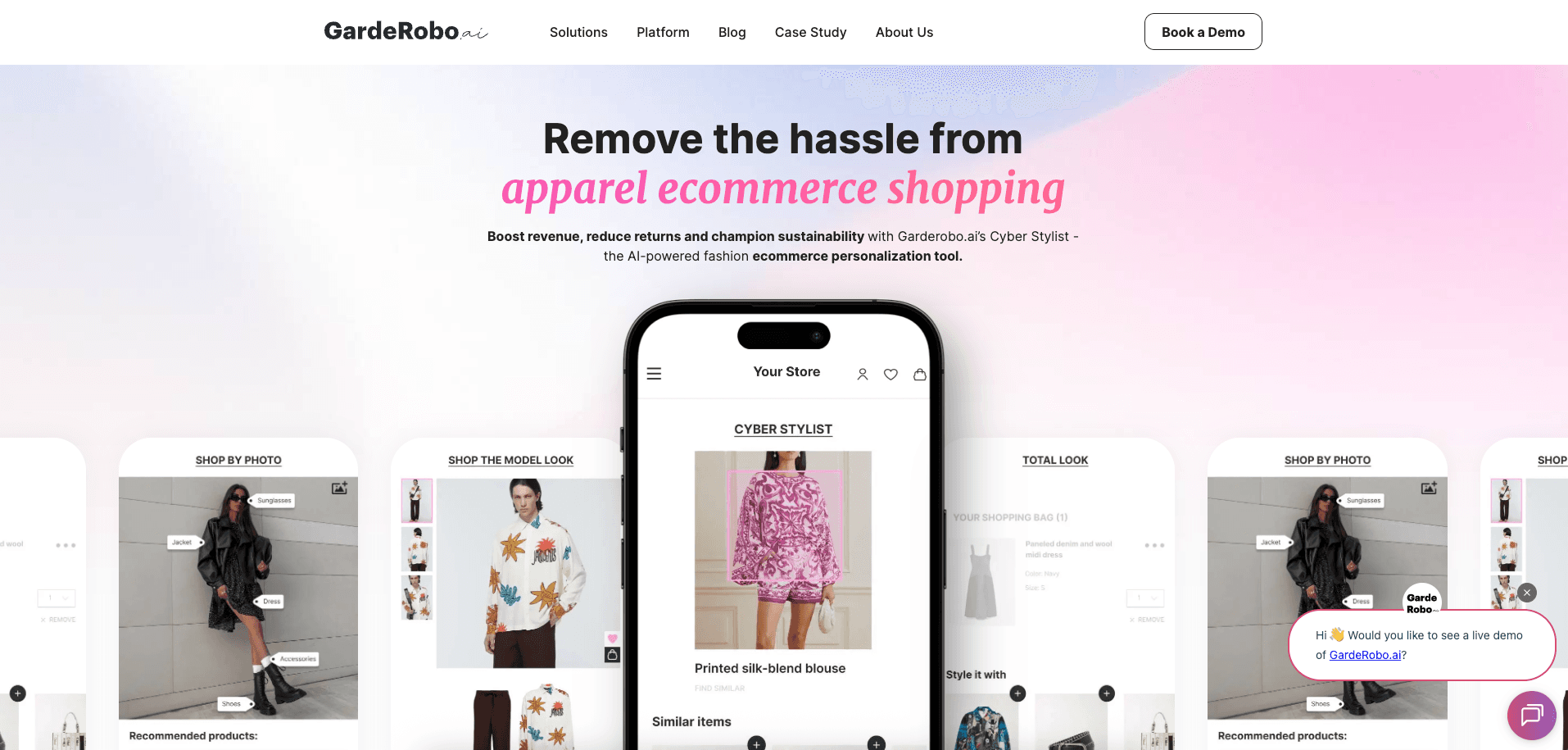
Garderobo - AI-powered fashion personalization tool
2024ecommerce · Garderobo AI
We started the development of Shopify app for easy and fast integration with Garderobo solution. Shopify store owners will no longer need to engage developer to benefit from Garderobo's leading AI personalization and recommendation features.
 Live
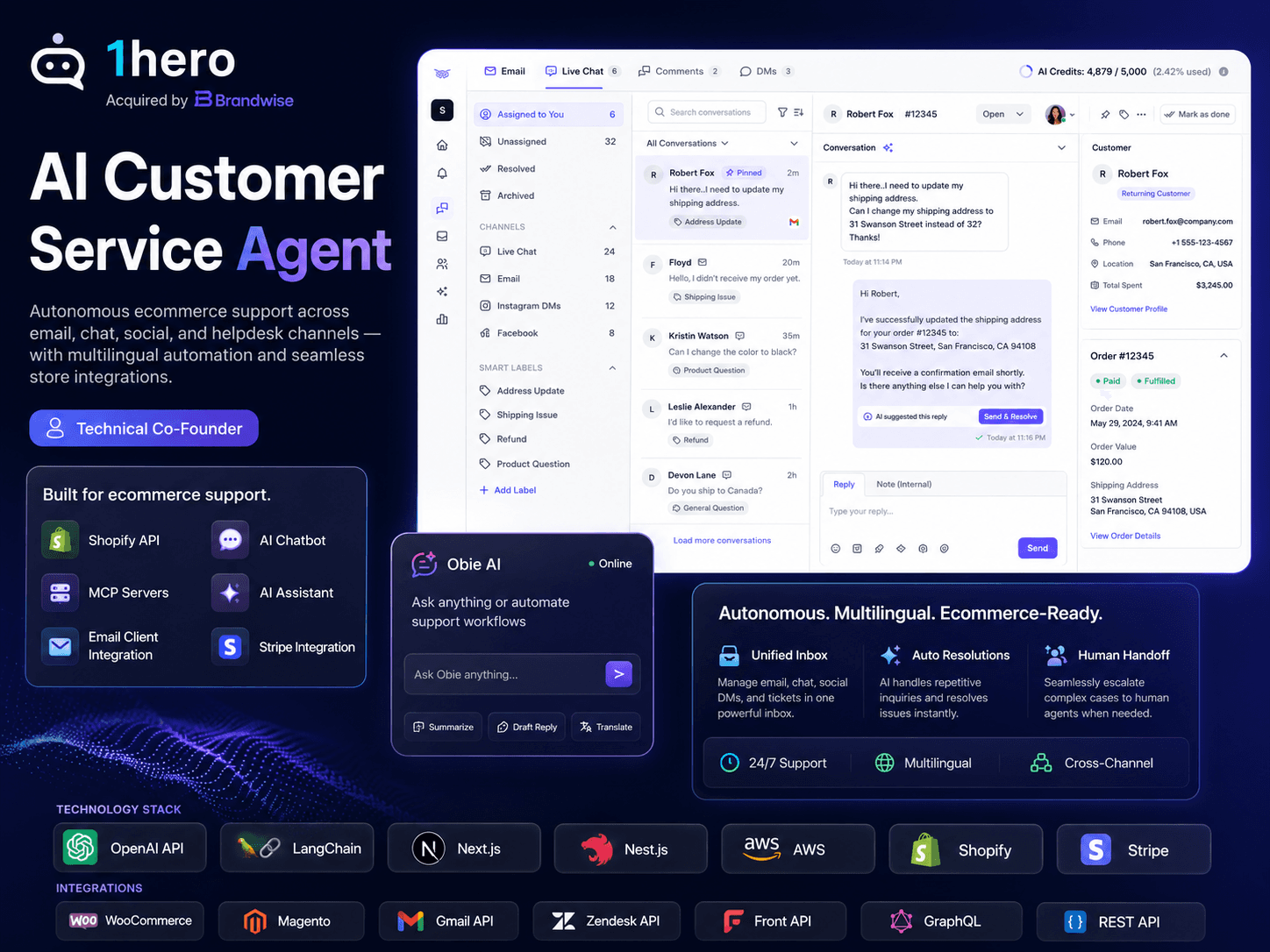
Live1hero - Most advanced AI email agent for e-commerce
2022ecommerce · ONEHERO LLC (Acquired by Brandwise)
1hero provides everything you could need from an e-commerce customer service team. It automatically responds to all customer messages across all support channels. This was especially useful when our company expanded to Europe and needed multilingual support— we didn't have to hire a single customer service agent. I can instruct 1hero just as I would a human customer support team. It's a game-changer, replacing many customer service agents for me.
 Live
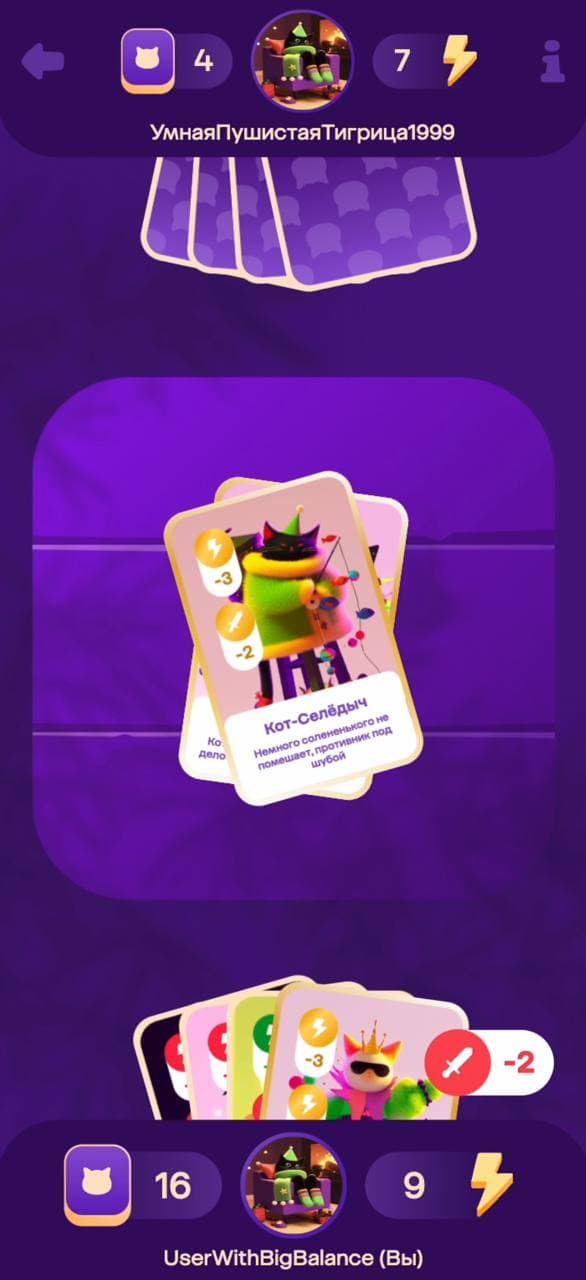
LiveMegaMarket – Interactive Web Game
2023ecommerce · “ООО «Маркетплейс»”
Developed an interactive web-based game for MegaMarket that engages users, integrates brand elements, and provides a fun and memorable experience across desktop and mobile browsers.
Pricing & timeline
Starting investment: $80,000 – $250,000
Timeline: 3-6 months
What Determines Price:
- AI complexity (simple chatbot vs advanced personalization engine)
- E-commerce integration scope (Shopify only vs multi-platform)
- Language support (English only vs multilingual)
- Training data requirements (small dataset vs large custom training)
- Automation scope (email only vs omnichannel)
- Customization level (off-the-shelf vs fully custom AI)
Typical Engagement:
AI Chatbot/Email Agent:
- Month 1: Training data collection, AI model selection, e-commerce integration
- Month 2: NLP training, intent classification, response generation
- Month 3: Testing, human-in-the-loop workflow, launch
- Cost: $80K-$150K
AI Personalization Engine:
- Month 1-2: Data pipeline, product analysis, recommendation algorithms
- Month 3-4: Frontend integration (product pages, homepage), A/B testing
- Month 5-6: Optimization, scale testing, launch
- Cost: $120K-$250K
Full E-Commerce Automation Suite:
- Month 1-3: AI customer service, personalization, order automation
- Month 4-6: Marketing automation, analytics dashboard, optimization
- Cost: $200K-$400K
Post-Launch Support:
- AI model retraining (quarterly)
- Performance optimization (click-through rate, conversion rate)
- New language support (if multilingual)
- Feature enhancements
- A/B testing and experimentation
- Customer feedback integratio
Why choose CAIAT
AI Customer Service:
1hero replaces 3-10 agents, 85% auto-resolution, 50+ languages
Fashion AI:
Garderobo personalization, 25% conversion lift for new customers
Context-Aware:
95% accuracy pulling order/customer data, natural responses
Multilingual:
GPT-based translation, 4.3/5 quality rating, 50+ languages
Cold Start Solved:
Personalization from first visit, no historical data required
Ready to build your AI & E-Commerce Automation?
Let’s discuss how this solution can benefit your business.